
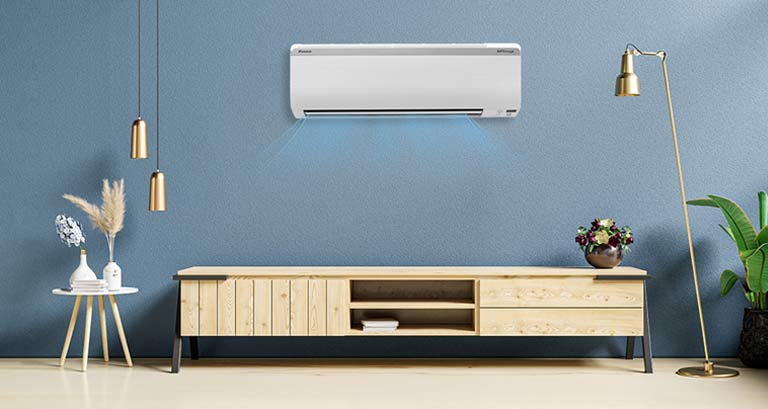
Throughout East Africa — from the muggy coastal heat of Mombasa and Dar es Salaam to the frenetic, dusty highlands of Nairobi — air conditioning has changed status, from luxury good to lifeline. As inverter technology spread among households, it has become the new minimum standard. Nevertheless, some unfounded rumors are still being heard in the local markets, and this has created hesitation among many. We clear the air to debunk some of the most common myths about inverter ACs, so you can stay cool efficiently.
Myth 1: A Tropical Inverter Air Conditioner Will Not Cool Fast Enough
In our region, when you come home from the outside into a room that has been baking under the equatorial sun for an entire day, you want immediate ease. One misconception is that inverter units are “slower” as they don’t run at full power all the time.
In fact, Inverter ACs are designed for speed. Upon its initial startup, the compressor operates at an “overdrive” frequency so that it can cool down quickly. Whereas the fixed speed has only one speed, an inverter varies the motor's speed depending on your need. After your bedroom or office hits the temperature you set, it will slow down to zero and just maintain that level perfectly. You don't get the "icebox" effect and immediate sweat that comes with older technology.
Myth 2: Inverter ACs Don’t Survive Local Power Fluctuations That might be fake news.
There are even concerns among many East Africans that the sensitive electronics in inverters will fry in frequent times of power surge, or “brownout.” It is true that inverter ACs do come with complicated circuit boards (PCBs), but the Best Air Conditioner Manufacturers label identify units that are developed for developing countries.
For most new devices, they have built-in voltage protection. But here's a local tip: even though most companies tout stabilizer-free operation, the variable nature of some of our grids means settling for a good quality dedicated AC guard or stabilizer is still a smart safety net. It shields your investment from the random power surges that plague our neighborhoods.
Myth 3: You Can’t Afford to Buy and Fix Them
Looking at 2 Ton Inverter AC Price in local shops, the first number can exceeds that of non-inverter model. So here’s what fuels the myth that they are “too expensive”.
In East Africa, where electricity tariffs can be high and volatile, the math is different. An inverter AC can decrease your monthly power bill by a large margin as it doesn’t unnecessarily waste power due to the constant “start-stop” cycle of most motors. In as little as a couple of hot seasons, the amount you will have saved on your utility bill should make up for the price disparity. What's more, since the motor doesn't have a hard start-up‚ there is less mechanical wear and tear, which means that your machine may last longer of you use it in this way.
Myth 4: Maintenance Can’t Be Done Locally
People has a sensation that even if the inverter AC breakdown, it cannot be repaired by anyone except the service engineer from the local market. Perhaps a decade ago this was the case; but not any longer. Inverter technology is now being extensively trained in East Africa at technician level.
Major brands such as Daikin have set up service centers and spare part hubs in various cities. So long as you select a reliable brand, getting a gas top-up or having the coils deeply cleaned couldn't be simpler than it is to do for an old-fashioned unit.
Myth 5: Inverter ACs are Ideal for Only Big Offices
There is a perception that this technology only applies to big commercial buildings. This is false. In fact, for residential use the inverter technology shines if you’re cooling a small studio apartment. Because home use often means long hours (e.g., sleep through a hot night) the variable speed motor keeps the room at an even and comfortable temperature and is quiet instead of that noisy "clunk" of the compressor coming on every 20 minutes.
Clearly, by getting fact from myth, inverter ACs are a perfect fit for the East African climate and economy. They combine fast cooling, extended durability and essential energy savings to ensure that they will pay off for years to come in any household.

